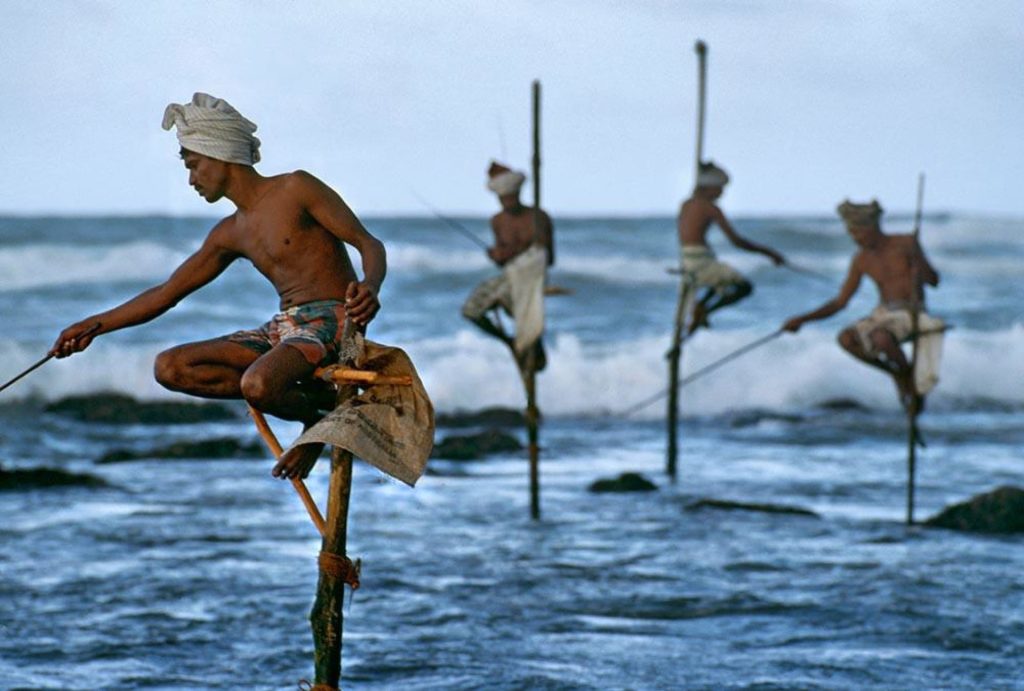
Few images of Sri Lanka are more instantly recognisable than the stilt fishermen of Koggala — men perched on thin wooden poles above the breaking surf, casting their lines into the turquoise Indian Ocean with extraordinary balance. It is an image of such quiet, photogenic beauty that it has come to represent Sri Lanka to the world.
The Tradition
Stilt fishing — known locally as “kottu” fishing — is believed to have originated during World War II when fishermen devised the stilts to fish in shallow water too rough for boats. Today it is as much a cultural performance and visitor attraction as a working fishing method.
“Balancing on the stilt above the Indian Ocean at sunset, with the sky turning pink and the sea sparkling — it was one of the most joyful, silly, unforgettable things I did in Sri Lanka.”
Best Time to Visit
The golden hour — after sunrise and before sunset — provides the most beautiful light for photography. Early morning is particularly recommended when the sea is calmer and the light is extraordinary. Local fishermen warmly welcome visitors to try the stilts themselves.
Few images of Sri Lanka are more instantly recognisable than the stilt fishermen of Koggala — men perched on thin wooden poles above the breaking surf, casting their lines into the turquoise Indian Ocean with extraordinary balance. It is an image of such quiet, photogenic beauty that it has come to represent Sri Lanka to the world.
The Tradition
Stilt fishing — known locally as “kottu” fishing — is believed to have originated during World War II when fishermen devised the stilts to fish in shallow water too rough for boats. Today it is as much a cultural performance and visitor attraction as a working fishing method.
“Balancing on the stilt above the Indian Ocean at sunset, with the sky turning pink and the sea sparkling — it was one of the most joyful, silly, unforgettable things I did in Sri Lanka.”
Best Time to Visit
The golden hour — after sunrise and before sunset — provides the most beautiful light for photography. Early morning is particularly recommended when the sea is calmer and the light is extraordinary. Local fishermen warmly welcome visitors to try the stilts themselves.