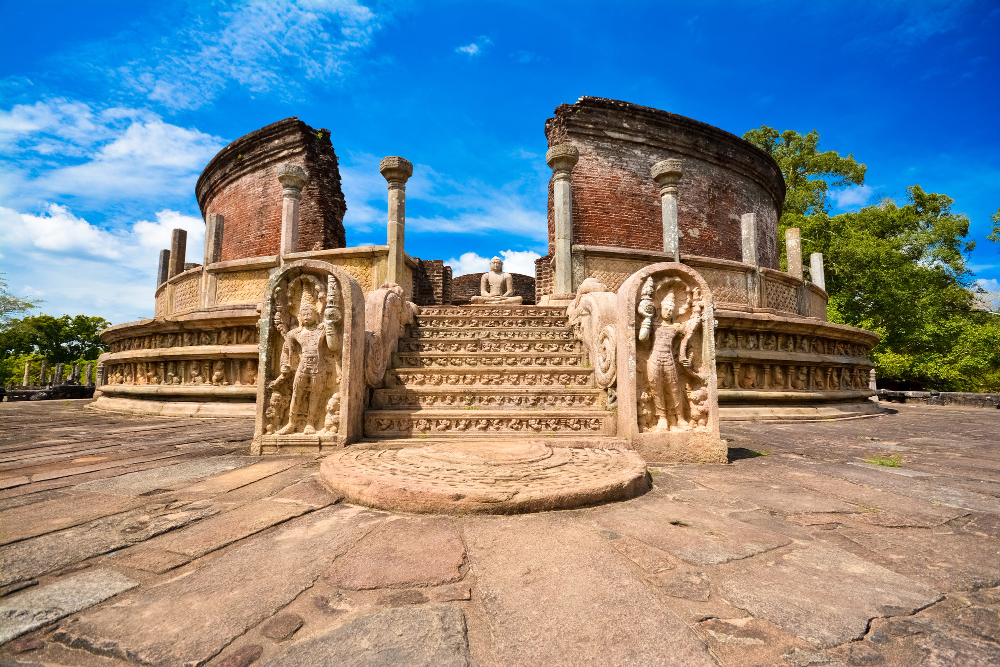
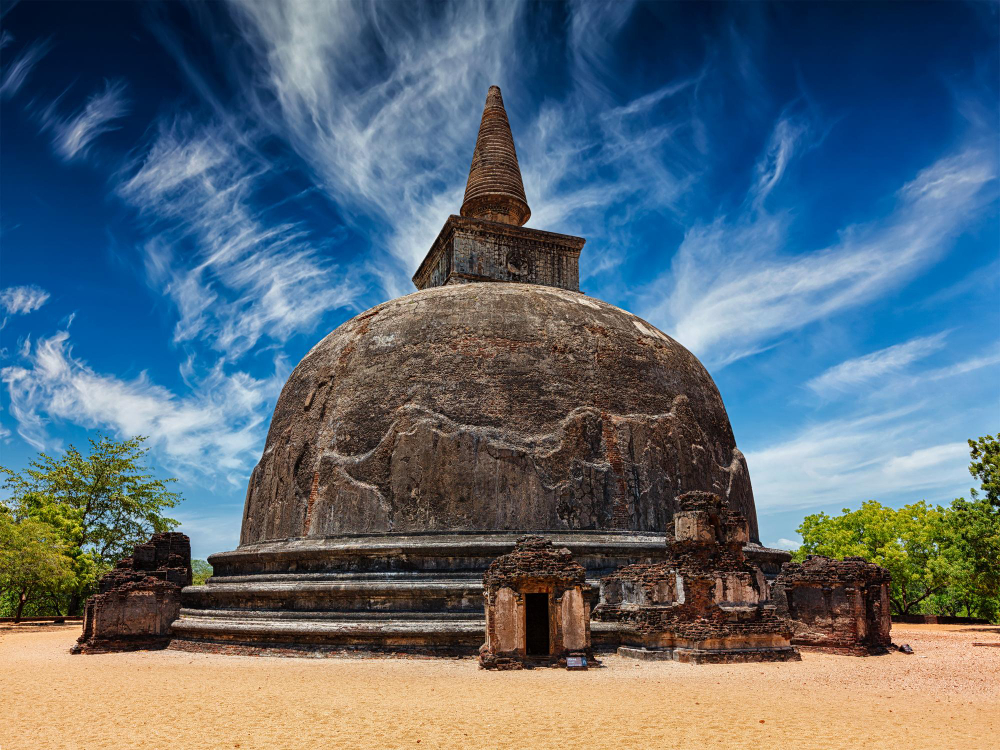
Sri Lanka’s medieval capital and second ancient city, Polonnaruwa is far better preserved than Anuradhapura — a compact, cycling-friendly complex of extraordinary stone temples, royal palaces, and the world-famous Gal Vihara Buddha statues carved directly into a granite face. Flourishing between the 11th and 13th centuries AD, Polonnaruwa represents the zenith of Sinhalese civilisation.
The Gal Vihara
The undisputed masterpiece of Polonnaruwa — the Gal Vihara comprises four magnificent Buddha figures carved directly into a single sweep of granite. The centrepiece is a 15-metre reclining Buddha of extraordinary serenity. To stand before the colossal reclining figure as the late afternoon sun catches the stone is genuinely moving.
“Cycling between Polonnaruwa’s temples in the golden hour, with monkeys watching from the ruins and herons rising from the ancient reservoir, was pure, unhurried joy.”
Explore by Bicycle
Unlike the sprawling scale of Anuradhapura, Polonnaruwa’s main ruins are concentrated enough to explore by bicycle — creating a wonderfully immersive archaeological experience with a sense of personal discovery that guided bus tours cannot replicate.
Sri Lanka’s medieval capital and second ancient city, Polonnaruwa is far better preserved than Anuradhapura — a compact, cycling-friendly complex of extraordinary stone temples, royal palaces, and the world-famous Gal Vihara Buddha statues carved directly into a granite face. Flourishing between the 11th and 13th centuries AD, Polonnaruwa represents the zenith of Sinhalese civilisation.
The Gal Vihara
The undisputed masterpiece of Polonnaruwa — the Gal Vihara comprises four magnificent Buddha figures carved directly into a single sweep of granite. The centrepiece is a 15-metre reclining Buddha of extraordinary serenity. To stand before the colossal reclining figure as the late afternoon sun catches the stone is genuinely moving.
“Cycling between Polonnaruwa’s temples in the golden hour, with monkeys watching from the ruins and herons rising from the ancient reservoir, was pure, unhurried joy.”
Explore by Bicycle
Unlike the sprawling scale of Anuradhapura, Polonnaruwa’s main ruins are concentrated enough to explore by bicycle — creating a wonderfully immersive archaeological experience with a sense of personal discovery that guided bus tours cannot replicate.